Safety and Rules
|
2 min read
Maximum Weight Limit 100 Kg Skydiving Bali Safety Rules
03 Jul 2026
Read

 Sky Dive in Bali Editorial Desk
Modern tandem skydiving safety technology means every rig carries two independent parachute systems, a device that opens the reserve automatically if nobody pulls it, and an instructor checklist that runs before every single jump. None of it depends on luck — each layer exists specifically to catch a failure in the layer above it.
A tandem skydiving rig is not one parachute with a spare taped on. It is a small stack of independent systems, each doing a different job, each built to work even if another layer never gets touched. USPA-style tandem standards describe the same basic stack across reputable operators worldwide, so understanding the pieces generically tells you what to expect from any properly equipped Bali jump, whichever licensed operator ends up running it.
Here is what sits in that stack, what each piece is actually for, and the moment it goes to work.
| Component | What It Does | When It Acts |
|---|---|---|
| Main canopy | Primary parachute the instructor deploys manually at a planned altitude | Standard deployment on every normal jump |
| Reserve canopy | A second, separately packed parachute held in its own compartment | Only if the main is cut away or never opens correctly |
| Automatic Activation Device (AAD) | A digital unit that continuously reads altitude and descent speed and fires the reserve if the pair is still falling too fast, too low | Only as a last-resort backup, independent of any human action |
| Reserve static line (RSL) / MARD | A mechanical link between the main risers and the reserve ripcord that pulls the reserve the instant a main is cut away | Fires immediately on cutaway, before an AAD would ever need to |
| Digital altimeter | Wrist- or chest-mounted instrument showing altitude in real time | Checked continuously through freefall and canopy flight |
| Weather minima | Published ceiling, visibility and wind limits a drop zone will not fly outside of | Assessed before the aircraft ever leaves the ground |
Every one of these systems existed long before any particular Bali operator opened its doors, which is exactly why the technology is worth understanding on its own terms, independent of who ends up running a given jump. Readers tracking when tandem jumps open on the island can join the Skydive Bali waiting list to be notified once an operator’s own equipment specifications and safety brief are published.
An AAD is a small digital computer, usually mounted inside the rig near the reserve container, that constantly measures barometric pressure to calculate altitude and rate of fall. It is not watching the instructor. It is watching the numbers.
If the unit detects that the pair is descending through a pre-set altitude threshold at a speed that means no canopy is open, it fires a cutter that severs the reserve closing loop and releases the reserve pin, independent of whether a human hand ever reaches a handle. USPA-style tandem standards treat the AAD as a backup layer, not the primary plan — the primary plan is still a conscious instructor deploying the main canopy on schedule. The AAD exists for the scenario where that primary plan breaks down.
Because the device works off altitude and speed rather than a timer, it stays silent through an entirely normal jump. A guest who has a completely uneventful skydive will never know the AAD did anything at all, which is the point: its whole job is to be irrelevant unless something else already went wrong.
A reserve static line (RSL) is a short line connecting the main parachute’s risers to the reserve ripcord. When an instructor cuts away a main canopy — releasing it deliberately because it opened badly or malfunctioned — that same motion yanks the RSL, which pulls the reserve pin automatically, without a second separate action.
Without an RSL, an instructor would need to cut away the main and then separately pull the reserve handle, two actions instead of one, with a gap of empty sky and lost altitude in between. The RSL closes that gap.
A MARD (Main-Assisted Reserve Deployment) is a refinement on the same idea. Instead of just pulling a pin, a MARD uses the departing main canopy’s own bridle to physically extract the reserve pilot chute, launching it into clean air faster and more symmetrically than a standard RSL alone. USPA-style guidance describes MARD systems as shortening the altitude lost during a cutaway-to-reserve sequence, which matters most in the lower-altitude scenarios where every second of hang time counts.
Between the AAD and the RSL/MARD, a tandem rig effectively has two independent, automatic routes to an open reserve canopy that do not depend on each other and do not depend on the instructor being conscious or able to reach a handle.
A digital altimeter is not a nice-to-have gadget; it is how an instructor knows, second by second, whether the jump is still on plan. Modern units mounted on the wrist or chest display altitude continuously through freefall and canopy flight, letting the instructor time the main canopy’s deployment to a specific planned altitude rather than guessing by feel.
Weather minima work the same way on a longer timescale. Drop zones publish ceiling, visibility and wind limits before any aircraft leaves the ground, and a jump that would put guests outside those limits simply does not fly that day, no matter how full the schedule is. Bali’s dry season, roughly April through October, tends to deliver the clearer skies and steadier winds that make those minima easiest to meet; the wet season, November through March, brings afternoon storms and a lower cloud base that can push a planned jump to a different slot or a different day entirely.
None of this is exciting to read about, and that is deliberate. Weather minima and altimeter checks are supposed to be boring, procedural, and non-negotiable — the opposite of an instructor making a judgment call in the moment.
Beyond the rig itself, USPA-style tandem procedure calls for a manual pre-jump check that runs on every flight, not on a rotating schedule. A typical sequence covers:
This is a checklist precisely because checklists do not rely on memory. Whichever licensed operator ultimately runs a Bali jump, this kind of structured, repeated pre-jump routine is the industry standard a guest should expect to see, not a courtesy.
Most first-timer anxiety clusters around a handful of predictable worries. Here is how the equipment and procedure above answer each one directly.
| Fear | Fact |
|---|---|
| “The parachute won’t open.” | Every tandem rig carries a main and a separately packed reserve, plus an AAD that fires the reserve on its own if certain altitude and speed thresholds are crossed. |
| “I’ll panic and do something wrong at the door.” | The instructor controls the harness connection and body position through exit and freefall; a student’s role is limited to a briefed arch and following cues, not flying the jump. |
| “I won’t be able to breathe during freefall.” | Air is present at every skydiving altitude; the sensation is wind pressure against the face, not oxygen loss, and instructors coach breathing through the nose or mouth before exit. |
| “Both parachutes could fail at the same time.” | Main and reserve are packed, inspected and deployed through separate, independent processes specifically so a problem with one does not cascade into the other. |
| “The landing will be rough or dangerous.” | The instructor flies the canopy through final approach and touchdown, typically bringing both people down together in a controlled slide or stand-up landing. |
| “I’m too heavy, too light, or too old to jump.” | Bali operators publish planning limits on weight, height, age and health that guests are screened against before a booking is confirmed. |
| “The gear might be old or badly maintained.” | Reserve canopies and AADs follow inspection and repacking schedules kept separate from the main canopy’s own maintenance record, per manufacturer and USPA-style guidance. |
| “There’s no way to change plans once we’re in the air.” | Instructors continuously read the altimeter and canopy performance and can adjust altitude timing or landing pattern in response to conditions in real time. |
| “I won’t know what to do if the instructor is somehow incapacitated.” | The AAD and RSL/MARD are specifically engineered as backups that fire without needing any human input at all. |
| “One bad gust of wind could ruin the whole jump.” | Weather minima are set and checked before the aircraft leaves the ground; a day outside those limits simply does not fly rather than being flown anyway. |
Sky Dive Bali, the Bali tandem service from Juara Holding Group, is coming soon — the desk is not yet taking bookings and has not confirmed an opening date. When it does open, it will publish its own equipment specifications, instructor credentials and safety brief rather than leaving newcomers to work from generic industry standards alone. Readers who want that brief the moment it exists are welcome to add their email to the waiting list so the desk, reachable by email at bd@juaraholding.com, can follow up directly once details are confirmed.
Tandem rigs use an automatic activation device that reads altitude and descent speed independently of the instructor. If the falling pair is still going too fast at too low an altitude with no canopy open, the AAD fires the reserve on its own, regardless of who is or isn’t able to reach a handle. It’s built as a last-resort backup, not the primary plan.
Reserve canopies and automatic activation devices are inspected and repacked on set schedules kept separate from a rig’s main canopy, following manufacturer guidance and USPA-style tandem safety standards. Instructors also run a full pre-jump checklist — harness connections, handle checks, altimeter function and AAD power — before every single flight, not on a rotating or occasional basis.
The two systems are deliberately kept independent: separate canopies, separate packing records, and a reserve static line or MARD that pulls the reserve the moment a main is cut away, plus an AAD as a second automatic backup. The layered design exists specifically to keep one failure from becoming two, which is why tandem systems rely on redundancy rather than a single point of failure.

Sky Dive in Bali Editorial Desk

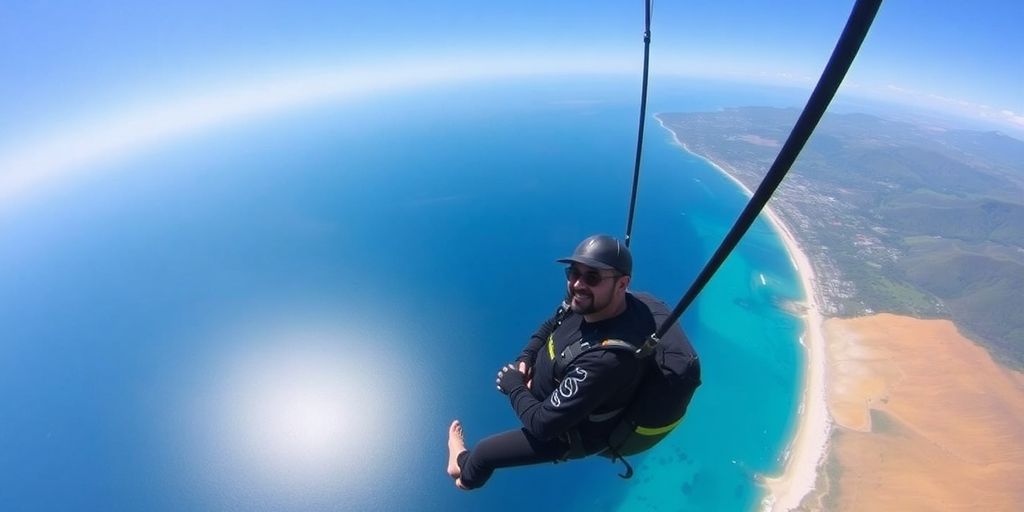
Experience the thrill of skydiving in Bali with our certified instructors. Book your tandem jump today.