Safety and Rules
 Sky Dive in Bali Editorial Desk
Accessible Skydiving Bali 2027: What to Expect and What to Ask
Sky Dive in Bali Editorial Desk
18 Sep 2026
9 min read
Accessible skydiving in 2027 means an instructor-assisted tandem jump adapted to your mobility, hearing, vision or medical profile — not a fixed program yet published by Sky Dive Bali. Drop zones elsewhere use modified harnesses, seated landings and case-by-case medical review; guests should email details ahead so any adaptation can be confirmed before travel is booked.
What Does “Accessible Skydiving” Actually Mean in 2027?
“Accessible” or “adaptive” tandem skydiving is not one standardized product. It is a set of adjustments a drop zone makes to a normal tandem jump — the same freefall, the same instructor, the same canopy ride — so that a guest with a physical, sensory or medical difference can do it as safely as anyone else. Programs marketed under names like “Accessible Tandem,” “Adaptive Tandem Skydiving” or “handifly” exist at individual operators in Canada, New Zealand, Germany, Scandinavia and the UK, and each one sets its own equipment, staffing and case-by-case rules. There is no single global accessibility standard that every drop zone follows, and no aviation regulator publishes a definitive list of which disabilities are eligible for a tandem jump. That distinction matters for anyone planning a 2027 trip around this experience: what one operator offers, another may not, and Sky Dive Bali has not yet published its own policy on any of this — the service remains in its coming-soon phase as of 2026.
How Do Drop Zones Elsewhere Adapt the Exit and Freefall?
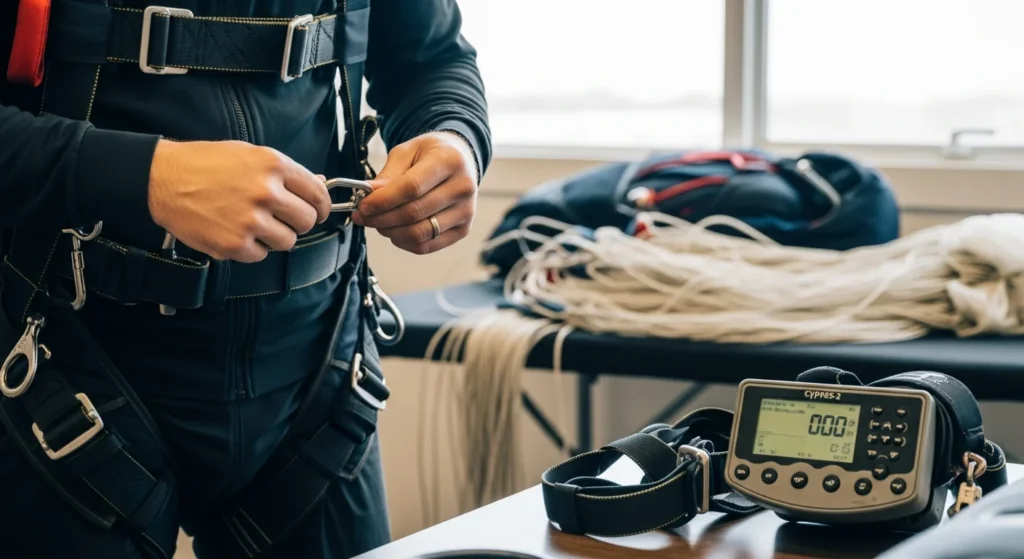
Where accessible tandem programs already run, the adaptation usually starts at the aircraft door. Instructors handle more of the physical positioning than in a standard tandem: helping a guest transfer from a wheelchair to the aircraft bench, securing the legs before exit, and managing body position through the door rather than relying on the guest to kneel or jump unassisted. Some operators use purpose-built harness systems — Canada’s Airborne Petawawa describes a “FREEDOM Harness” with leg straps that lock a guest’s legs to the instructor’s for freefall stability, and Skydive Auckland references a similar leg-support harness for passengers with limited or no leg movement. For guests who are deaf or hard of hearing, operators such as Start Skydiving in the United States say a hearing impairment is “not a concern” for a tandem, provided expectations are set beforehand, often with an ASL interpreter or agreed hand signals. Vision-impaired guests are generally briefed verbally and by touch rather than through visual cues. None of this is regulated by a single certifying body — it is built by each drop zone’s own chief instructor and risk-assessment process.
How Does the Landing Change for Guests With Limited Leg Movement?
Landing is usually the most heavily adapted part of the jump. Rather than the guest running or absorbing impact on their legs, several operators use a seated or sliding landing: the instructor lifts and supports the guest’s legs once the canopy is open, and the pair lands together in a controlled slide instead of on their feet. A German tandem operator offering wheelchair-accessible jumps describes releasing in-flight leg restraints after the parachute opens, then securing the legs forward with carabiners for a seated touchdown. Denmark’s Dropzone Denmark and New Zealand’s Skydive Auckland describe comparable systems. These landings typically require calmer wind conditions and an experienced instructor, which is why several UK guides for skydiving with a disability recommend checking how many similar jumps a given drop zone has actually completed before booking — experience with this specific adaptation, not just general tandem experience, is what makes it safe.
Which Conditions Usually Need a Doctor’s Letter Before You Jump?
Medical clearance requirements come from national parachuting associations and individual operators, not from a single global rulebook, and they vary by country. Across the operator medical forms and national-federation health declarations reviewed for this guide, several condition categories come up repeatedly as needing a doctor’s signed letter, and in some cases as reasons a jump won’t be approved at all. Heart disease, recent heart attacks, arrhythmias and uncontrolled blood pressure are near-universal red flags. Epilepsy and other seizure disorders are treated the same way because a seizure cannot be safely managed in freefall or under canopy. Pregnancy is treated as an absolute no by essentially every operator surveyed, regardless of trimester. Recent spinal or major surgery, uncontrolled diabetes, and severe respiratory conditions such as COPD also commonly require written clearance. Sky Dive Bali has not yet published its own list of excluded or clearance-required conditions; guests planning a 2027 jump who have any of these conditions should read Bali skydive medical screening for how this typically gets assessed, and should raise their specific situation with the desk by email well before booking flights.
How Are Amputation, Older Age and Other Case-by-Case Situations Handled?
Most accessible tandem programs work on individual assessment rather than a fixed checklist. Amputees are generally accommodated through tailored harnessing and a pre-jump conversation about balance and landing support — indoor wind-tunnel programs like iFLY’s “All Abilities” sessions list amputation among the conditions they plan around individually, and outdoor operators follow a similar logic. Older age on its own is rarely a disqualifier; most drop zones set a minimum age (commonly 16 or 18) but no universal maximum, instead asking guests over a certain age, or with a relevant medical history, to bring a doctor’s fitness letter. A guest’s actual weight, leg strength, balance and medical history typically matter more than a diagnosis label or a birth year. Because every drop zone’s equipment and staff experience differs, the same disability might be workable at one operator and declined at another — which is why UK disability-sport guides consistently recommend a direct conversation with the chief instructor of the specific drop zone before assuming either a yes or a no.
What Has Sky Dive Bali Published About Its Own Accessibility Policy?
Nothing yet, and that is worth stating plainly. Sky Dive Bali, a Juara Holding Group brand, is currently in a coming-soon phase: the tandem service over North Bali’s Skydive Buleleng drop zone has not opened for bookings and no opening date has been confirmed. Because the service has not launched, there is no published accessibility policy, no confirmed list of medical exclusions, and no confirmed harness or landing adaptation available for review. What guests can do now is register interest through the homepage waiting-list form and email specific accessibility or medical questions to the desk directly, so that any relevant detail is on file before the service opens and pricing and slot details are confirmed.
What Should You Tell the Desk by Email?
| Your Situation | What to Tell the Desk by Email | What to Expect at the Briefing |
|---|---|---|
| Limited leg mobility or wheelchair use | Level of leg movement, whether you can bear any weight, prior tandem experience if any | Questions about transfer assistance and landing preference; no equipment commitment until launch |
| Heart, seizure, or major surgery history | Diagnosis, current treatment, date of any recent surgery | A request for a doctor’s letter before any jump date is confirmed |
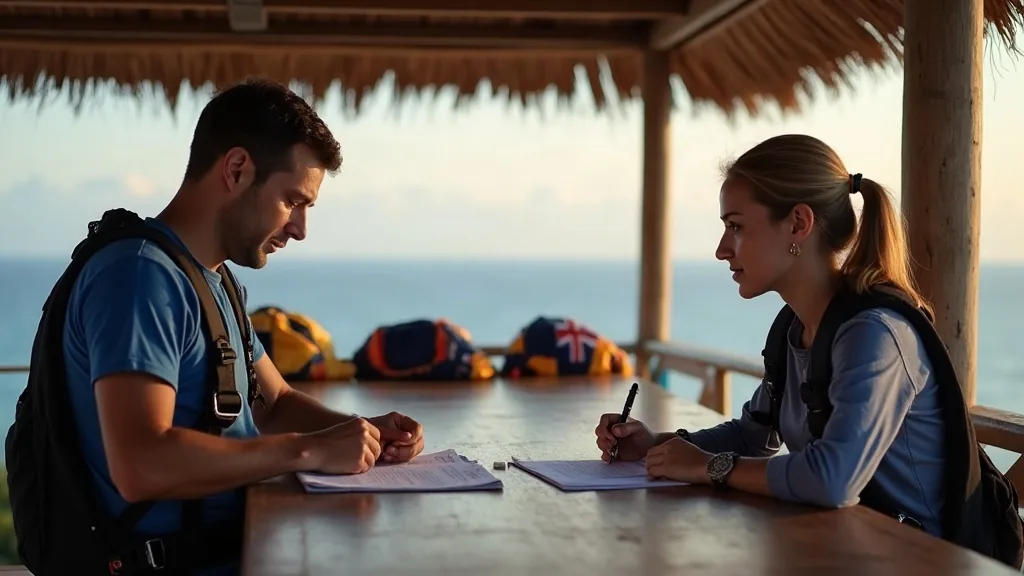
| Hearing or vision impairment | Preferred communication method (interpreter, written cues, tactile signals) | A briefing style matched to what you specified, confirmed again on the day |
| Amputation or prosthesis use | Which limb, prosthesis type, whether it is worn during physical activity | Individual discussion of harness fit and landing support |
| Age over 65 or under 18 | Age, general fitness, any relevant medical history | A request for a doctor’s fitness letter where applicable |
What Should You Ask Any Skydiving Operator About Accessibility?
| Question to Ask | Why It Matters |
|---|---|
| How many tandems have you done with this specific adaptation? | Experience with your exact situation is more relevant than general tandem count |
| What harness or landing method would you use for me? | Confirms whether a seated or standard landing is planned |
| What medical documentation do you need, and by when? | Avoids a same-day surprise that cancels the jump |
| Who makes the final safety call — and can I speak with them directly? | Chief instructors, not sales staff, make eligibility decisions |
| What happens if conditions on the day aren’t suitable for my adaptation? | Wind and weather requirements are often stricter for adapted landings |
None of this is a guarantee of eligibility, and nothing here is medical advice. Whether a specific condition, disability or age can be accommodated is a decision every operator makes case by case, based on its own equipment, staff experience and the guest’s individual medical history — Sky Dive Bali included, once its own policy is published at launch. Anyone with a relevant medical condition should consult their own doctor before planning travel, and should email bd@juaraholding.com with specifics before booking flights around a 2027 jump date.
Frequently Asked Questions
Will Sky Dive Bali offer adaptive equipment like a seated-landing harness at launch?
That has not been confirmed. Sky Dive Bali’s tandem service is coming soon and its equipment and accessibility details are set at launch, not published in advance. Guests who need a specific adaptation should email the desk with their situation so it can be considered once the operational policy and partner details are finalized.
Can someone with a pacemaker or treated heart condition still plan for a 2027 jump?
Possibly, but only with a doctor’s written clearance — operators elsewhere near-universally require this for heart conditions, and some heart issues are treated as outright exclusions. Since Sky Dive Bali’s own medical policy is not yet published, guests in this situation should email specifics to the desk and consult their cardiologist before booking travel.
Is there a cost difference for an adapted or accessible tandem jump?
Sky Dive Bali has not published pricing details tied to accessibility adaptations, and no such figures should be assumed. Guests with accessibility needs should email the desk to discuss their situation; any pricing or eligibility information will be confirmed directly once the service opens for bookings.

Sky Dive in Bali Editorial Desk
Related Articles
Safety and Rules
|
3 min read
Is Skydiving in Bali Safe? An Operator-Side Risk Breakdown (2026)
05 May 2026
Read
Ready to Jump?
Experience the thrill of skydiving in Bali with our certified instructors. Book your tandem jump today.