
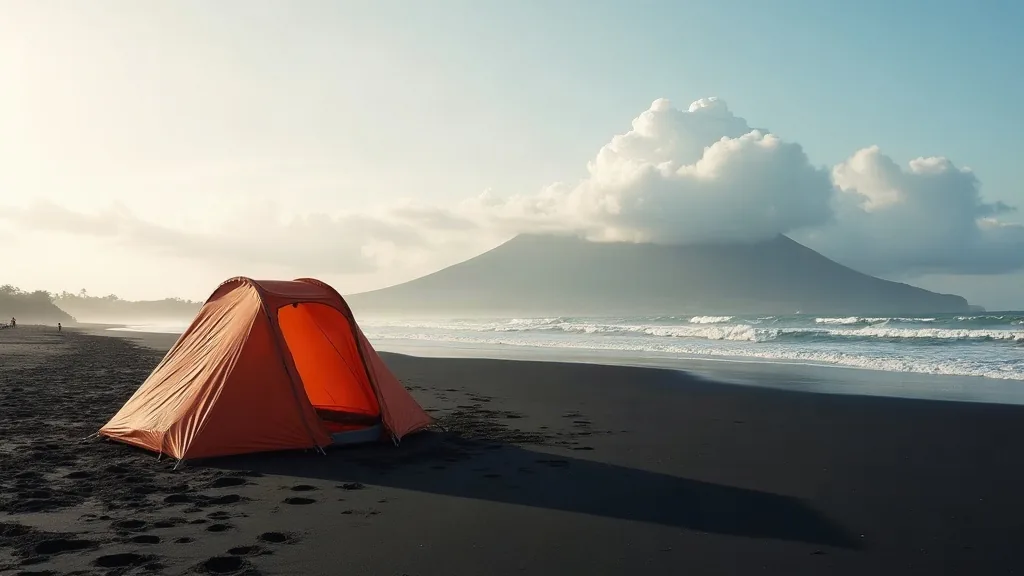
A Bali tandem skydive only flies inside strict weather minima: clear cloud base above exit altitude, wind under the landing-zone limit, open visibility, and no rain nearby. That is why Sky Dive Bali favors morning jumps, and why the dry season, roughly April through October, with May to September rated clearest by 2026 guides, is the target window for the waiting list.
What Actually Grounds a Bali Tandem Skydive?
Tandem skydiving runs on the same physics everywhere, and Bali’s drop zone at Skydive Buleleng, against the black-sand coastline, waterfalls and volcanic ridges of North Bali, is no exception. A jump is not cleared just because it isn’t raining. Four conditions get checked before anyone boards:
- Cloud base must sit clear above the planned exit altitude, cited by Bali operators as around 10,000 feet, so the tandem pair can see the landing area through the roughly 60-second freefall.
- Wind at the landing zone has to stay under the operator’s published limit; gusty coastal wind off the Bali Sea makes a soft tandem landing harder to control.
- Visibility needs to stay open enough for the instructor to spot the landing target and any air traffic before descent.
- Rain and storm cells anywhere near the flight path or landing zone are an automatic no-go.
These are the same categories the Directorate General of Civil Aviation, under Indonesia’s Ministry of Transportation, and FASI, the national aero-sport federation, expect any aerosports operator to check, mirroring the tandem reference standards USPA publishes internationally. Sky Dive Bali will confirm its own minima at launch; until then, treat cloud, wind, rain and visibility as the four gatekeepers, and the morning-jump preference as a weather choice — mornings usually beat afternoon convective cloud buildup.
Which Months Give Bali Skydiving the Clearest Skies?
Bali runs on two broad seasons. The dry season, April through October, brings more stable winds and clearer skies, and 2026 seasonal guides single out May through September as the best-visibility stretch. The wet season, November through March, brings afternoon storms and a lower cloud base, both working against the weather minima above.
Bali’s tourism rhythm helps with timing a visit, not just a jump. The Bali Tourism Statistics Book 2024, published by Dinas Pariwisata Provinsi Bali, recorded 6,333,360 international arrivals, with a 2025 analysis naming July the busiest month (625,665 visitors) and April, May and October as shoulder months; July, August and December carry the heaviest crowds overall.
| Month | Season | Typical sky | Tourism crowd level |
|---|---|---|---|
| Jan–Feb | Wet | Cloudy, afternoon showers | Moderate to lower |
| March | Wet, tail end | Improving late month; Nyepi shutdown applies | Lower, but island closes 24h |
| Apr–May | Dry begins | Clearing, best window starts | Shoulder (busier) |
| Jun–Jul | Dry, best window | Clear, stable winds | Rising to busiest (July peak) |
| Aug | Dry, best window | Clear, stable winds | Busiest |
| Sep | Dry, best window ends | Clear, occasional afternoon cloud | Shoulder |
| Oct | Dry, tail end | Variable, early-storm risk late month | Shoulder |
| Nov–Dec | Wet begins | Increasing afternoon storms | Moderate, rising to busiest in Dec |
Nyepi, the Day of Silence, falls in March every year and shuts the whole island, including the airport, for 24 hours. As of September 2026, Bali’s official 2027 calendar had not published a final Nyepi date, with different Balinese calendars pointing to either 8 or 9 March 2027; check the confirmed date closer to the time rather than book against an estimate.
What Does a Weather Hold Actually Look Like?
Even inside the right season, one day can still fail the check — cloud below exit altitude, wind over the landing-zone limit, a storm cell tracking toward the drop zone, or a sea-breeze shift that changes wind direction faster than the crew can re-brief for. Any one of these can hold a jump even under blue sky overhead, because the landing zone and flight path both have to clear independently. Picture the hold as a sequence, not a fixed guarantee:
- Standby – the morning slot pauses at the pickup point or drop zone while conditions are rechecked.
- Re-brief – the ground team gives an updated read on cloud, wind and rain.
- Later slot or another day – if conditions don’t clear in the window, the jump shifts later the same day or moves to the next date.
Sky Dive Bali has not yet published rescheduling, refund or deposit terms, because the tandem service is coming soon and not currently taking bookings. Those terms will appear when operations open; nothing here promises how a specific hold gets resolved.
How Much Does a Bali Tandem Skydive Cost?
| Experience | Price | What it covers | Status |
|---|---|---|---|
| Tandem skydive, Skydive Buleleng, North Bali | USD 1,200 all-inclusive per person (roughly Rp 19.5 million, rough conversion) | Jump from up to 14,000 ft, roughly 60 seconds of freefall, instructor described as certified to USPA-standard tandem training, photo and video package, hotel pickup from South Bali and DPS transfer planning | Coming soon; not open for booking |
That is the only price published anywhere on the site. Sky Dive Bali’s FAQ notes waiting-list members get priority slot allocation and locked-in 2026 pricing once the service opens, and guests who also book with sister brands such as Sky Dive Bali (Juara Holding Group) or Sky Dive Bali (Juara Holding Group) may combine bookings for added value — no discount percentage or third-party rate is published.
How Does Booking Actually Work Right Now?
There is no live booking system yet, and that is worth saying plainly:
- Reserve your spot – submit one email through the Reserve My Spot form at theskydivebali.com/#book-form.
- Desk confirmation by email – the concierge desk replies from bd@juaraholding.com, not by WhatsApp, phone or live chat, since none of those channels exist for this brand today.
- Waiting-list status – your email holds a place on the launch list, with priority allocation and 2026 pricing locked in once operations begin; no launch date, slot count or response time is published yet.
Because weather is the biggest swing factor, give the desk a date range rather than one fixed day — a note like “any morning in the last week of June” gives future scheduling far more room to land you inside a clear window than a single date does.
Ready to plan around Bali’s clearest skies? Submit your email through Reserve My Spot at theskydivebali.com/#book-form with that date range. Sky Dive Bali (Juara Holding Group) is an independent coordination desk, not a licensed weather forecaster or aviation authority, and follows up only by email from bd@juaraholding.com.
Frequently Asked Questions
What wind speed stops a tandem skydive in Bali?
Sky Dive Bali has not yet published its exact wind-speed limit, since the service is still coming soon. Tandem operators generally ground jumps once landing-zone wind exceeds their published ceiling, because a fast crosswind near the Bali Sea coastline makes a controlled two-person landing unsafe. Expect the desk to confirm its specific number at launch.
Does Bali skydiving run at all during the rainy season?
Jumps can still happen in the wet season, November through March, but the odds drop because afternoon storms and a lower cloud base are more frequent then. The dry season, April through October, with May to September rated clearest in 2026 guides, is the more reliable window for a tandem skydive over North Bali.
What time of day has the best skydiving weather in Bali?
Mornings generally offer calmer wind and a clearer cloud base before tropical cloud builds through the afternoon, which is why Sky Dive Bali’s published plan favors morning slots. Afternoon storms are more common later in the day, especially in the wet season, making early jumps the safer weather bet.
What happens if my jump gets cancelled for weather?
Expect a standby period, a re-brief from the ground team on current cloud, wind and rain, then either a later slot the same day or a move to another date. Sky Dive Bali has not yet published formal rescheduling, refund or deposit terms, since the tandem service is not currently open for bookings.
Should I give the desk one date or a date range when I reserve my spot?
A date range gives Bali’s weather far more room to cooperate than a single fixed day, since cloud, wind and rain can each independently ground a morning slot. When you submit the Reserve My Spot form, note a window such as a full week, especially if you are targeting the dry-season peak between June and September.