

 Sky Dive in Bali Editorial Desk
For most visitors in 2027, a single outdoor tandem with Sky Dive Bali (USD 1,200 as of August 2026) delivers roughly 45–60 seconds of real freefall, compared with 60–120 seconds of wind-tunnel time at IFLY for about USD 60–120. Indoor skydiving is cheaper and highly controlled; outdoor Bali skydiving is dramatically more intense.
Price is the first filter for many travelers comparing options. As of August 2026, Sky Dive Bali’s published rate for a complete tandem skydive is USD 1,200 (about Rp 19.5 juta at that time) for one jump, fully inclusive. That places outdoor Bali skydiving in the premium, bucket‑list category rather than a casual afternoon activity.
IFLY-style tunnels in Southeast Asia typically sell flight packages from about USD 60–120 for 1–4 short “flights” of 30–60 seconds each, as of August 2026. Expect IFLY Bali indoor skydiving prices to align with this regional pattern in 2027, with occasional promos and family bundles. That means the typical IFLY Bali vs real skydiving cost gap is roughly 10:1 per person.
The key difference is what each ticket includes. A tandem skydive rate covers aircraft time, fuel, a professional tandem instructor, ground crew, gear rental, basic training, and usually media options. bali skydiving vs indoor skydiving ifly 2027 comparison packages at an IFLY tunnel normally focus on brief coached flights, rental of a suit and helmet, and a short classroom briefing. For repeat time in the airflow, indoor skydiving represents far better “minutes in the sky” per dollar; for a once‑in‑a‑lifetime moment, outdoor skydiving stands alone.
Safety profiles differ because the environments are different. A modern IFLY tunnel runs inside a tightly controlled vertical wind column, supervised by instructors who can stop your flight or reduce wind speed in seconds. Solid flooring, padded walls, and netting keep flyers close to ground level. Historical data from global tunnels (through August 2026) shows mostly minor incidents such as bumps, sprains, or shoulder tweaks, especially for unfit adults trying advanced moves early.
Outdoor tandem skydiving involves an aircraft climb, exit at altitude, freefall, canopy flight, and landing. Tandem systems are engineered with redundancy: a main canopy and a reserve canopy, plus automatic activation devices that attempt to deploy a reserve if altitude thresholds are crossed without deployment. Sky Dive Bali states maximum tandem weight at 100 kg and minimum height at 140 cm, with age 18+ or 16+ with parental consent, to keep the equipment inside manufacturer-rated limits.
At Bali’s Pantai Kelating and Buleleng drop zones, Sky Dive Bali has publicly committed to delay paid operations until coordination with AirNav Indonesia, TNI-AU, and FASI reaches full operational status. That conservative stance underlines how airspace deconfliction sits at the heart of outdoor risk management. For risk-averse travelers or families, indoor Bali skydiving for kids in a tunnel will usually feel safer because there is no aircraft, no parachute, and no exposure to cloud build-up or crosswinds.
Thrill is subjective, yet there are some reliable patterns. A first tandem skydive in Bali typically delivers 45–60 seconds of terminal-velocity freefall at aircraft exit altitudes commonly used worldwide, followed by several minutes under canopy with views toward Pantai Kelating or North Bali mountains such as Gunung Batur. Sensory overload is high: aircraft noise, rush of air, altitude, sea and mountain views, and the mental flip of stepping into open sky.
Indoor tunnels recreate the feeling of bodyflight but not the psychological step out of a door at altitude. Flyers hover 1–3 meters above a tensioned net, inside clear walls. For pure body control, repeated tunnel time quickly feels more like a technical sport than an adrenaline spike. For many beginners, two minutes of tunnel “freefall” in 2027 will feel intense on the first try, then rapidly become training rather than “edge-of-your-seat” excitement.
Travelers researching bali skydiving for people with vertigo should distinguish between visual height exposure and airflow sensation. In a tunnel, the eye sees only a few meters of drop, which often makes vertigo manageable. On a real skydive, the distance to the ground is so great that some people experience less classic “balcony edge” vertigo, yet anxiety about the aircraft exit can be stronger. The most efficient compromise is often a session of IFLY Bali training before outdoor skydive plans, using the tunnel to test personal comfort with strong wind and skydiving body positions before investing in a full tandem.
Sky Dive Bali sets firm tandem parameters: maximum weight 100 kg (220 lbs), minimum height 140 cm, and usually an 18+ age minimum, with 16–17 allowed only when a parent or legal guardian is physically present to sign. There is no formal upper age limit, but anyone over 65 is encouraged to bring a doctor’s letter, especially after major surgery. Pregnancy is not allowed under any circumstances.
By contrast, a typical Bali indoor skydiving weight limit will often sit slightly higher than the outdoor 100 kg mark, though each tunnel publishes its own threshold. A common global standard through August 2026 is somewhere around 120 kg for experienced flyers, with tighter limits for children. A Bali indoor skydiving height limit may be more about equipment fit than hard physics; many tunnels take children from about 4–5 years old, subject to well-fitted helmets and suits.
This makes bali indoor skydiving for kids an attractive option for families where only the adults meet outdoor requirements. Younger siblings and older relatives can still feel airflow and enjoy a controlled “flying” photo, while adults plan a full jump day using the skydiving bali tandem booking channel once public operations commence. Families comparing indoor skydiving bali ifly tickets with an eventual outdoor skydive should factor in that tunnels can sell multi-flight packs for children, making them a repeatable holiday activity rather than a single-event splurge.
Travelers often research bali skydiving vs dubai comparison while planning long-haul itineraries. Dubai has operated both iconic outdoor skydives over the Palm and major IFLY-style wind tunnels for years. As of August 2026, Dubai’s tandem prices sit significantly lower than USD 1,200, but still in a premium band, helped by high volume and long-established airspace corridors.
Bali, by contrast, is building toward fully coordinated sport-aviation operations with AirNav Indonesia, TNI-AU, and FASI at Pantai Kelating and Buleleng. The price premium in Bali reflects smaller scale, more complex airspace sharing, and the logistical cost of operating in an island setting with less existing infrastructure for jump aircraft.
Climate also shapes the decision. Bali’s May, June, and September window offers relatively clear skies with moderate winds, yet November–March brings afternoon thunderstorms that can push cancellation rates to 60–80% for late-day jumps. Dubai’s desert climate tends to be more predictable but hotter at ground level, especially in mid-year. A traveler keen on minimizing weather risk might favor Dubai; someone planning a broader island itinerary, including surfing or exploring eco conscious skydiving in bali 2027 carbon impact options, may accept higher cost and more variable conditions for the scenery and culture.
Most itineraries in 2027 will weave sky activities into broader Bali visits rather than dedicating an entire week just to flying. For first-timers, an efficient sequence is: one afternoon in the tunnel for IFLY Bali training before outdoor skydive attempts, a rest day focused on light activity and hydration, then a dedicated jump day targeting a morning slot in the May–June–September window. This allows jet-lag recovery and progressive exposure to the sensations of freefall.
As for things to do near IFLY Bali, the likely locations are urban or resort-adjacent, with easy access to shopping malls, casual restaurants, and family-friendly attractions. A tunnel session can easily fit between a half-day surf lesson and an evening food tour. The outdoor drop zones at Pantai Kelating and Buleleng are more “day trip” destinations, with longer drives from Seminyak or Canggu and surroundings that reward unhurried exploration of beaches, rice fields, and North Bali villages.
Future travelers watching the bali skydiving events and competitions 2027 calendar may also plan trips around boogie weeks or coaching camps, using tunnels for skill progression and then flying with experienced groups over the island. Those buying surprises for partners or friends can also explore bali skydiving gift vouchers for flexible 2027–2028 usage aligned with upcoming events and training blocks.
Tipping is not mandatory in Bali, but many visitors choose to offer a gratuity if they feel the instructor delivered exceptional care, coaching, or video footage. There is no fixed percentage; small cash tips or digital transfers are usually accepted. Always prioritize paying for official photos and videos first, then add a tip only if budget allows.
Outdoor tandem skydiving in Bali is positioned as a premium activity, with Sky Dive Bali’s published rate at USD 1,200 (sekitar Rp 19,5 juta) per orang per Agustus 2026. Untuk backpacker dengan budget terbatas, opsi lebih realistis adalah paket IFLY tunnel yang jauh lebih murah, atau menabung khusus untuk satu lompatan sekali seumur hidup selama perjalanan berikutnya.
A 2027 outdoor tandem price in Bali typically includes aircraft seat, instructor, gear rental, basic ground school, jumpsuit, goggles, and safety checks. Many operators bundle media, but some charge extra. Indoor IFLY Bali packages usually include a short briefing, rental suit and helmet, and 1–4 coached wind-tunnel flights, with photos and extra minutes sold separately.
Reactions vary. Some people with balcony-style vertigo manage surprisingly well because the ground appears far away and perspective is different. Others find the aircraft exit overwhelming. A practical path is to test comfort with airflow in a tunnel session first, then discuss medical history with staff and, if needed, consult a doctor before booking an outdoor skydive.
Basic bali skydiving hydration and nutrition tips are simple: drink plenty of water the day before and morning of your jump, avoid heavy alcohol for at least 24 hours, and choose light, low-grease meals. A small breakfast or snack is preferable to jumping on an empty stomach. In Bali’s heat, consider electrolytes if you sweat heavily while waiting on the ground.
For tailored advice, scheduling, or questions about Bali skydiving loyalty rewards and combined tunnel–outdoor packages, contact the Juara Holding Group BD desk via WhatsApp 6281128590000 or email sales@balipremiumtrip.com.
Last updated 1 August 2026

Sky Dive in Bali Editorial Desk

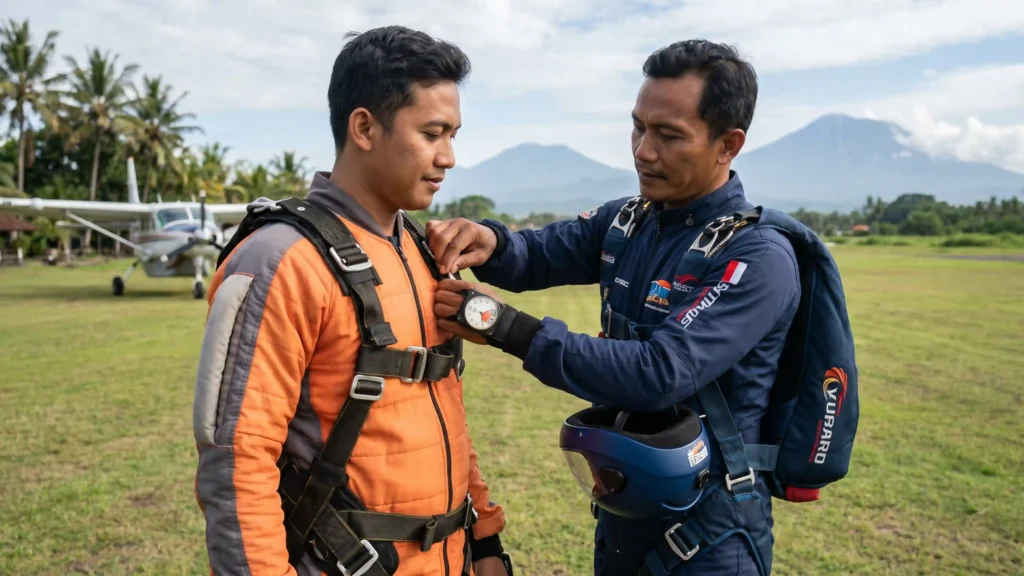
Experience the thrill of skydiving in Bali with our certified instructors. Book your tandem jump today.
Operated by Bali Premium Trip · the same desk across our Bali network