Uncategorized
|
2 min read
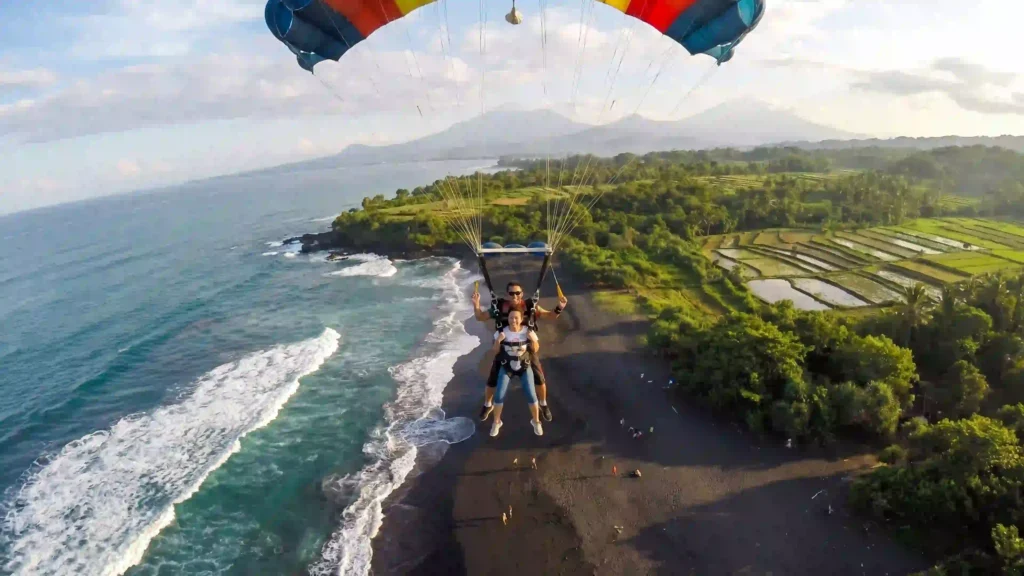
Best Tandem Skydive Location For Black Sand Beach Views Bali
03 Jul 2026
Read


 Sky Dive in Bali Editorial Desk
The best time to skydive in Bali in 2027, based on the current best time to skydive in bali 2027 season forecast, is May, June, and September. These three months sit inside the dry season, with historically the clearest skies, lowest weather cancellation rate for skydiving Bali, and more moderate winds than July–August holiday peaks.
Bali’s climate pattern is strongly two‑season: a dry season typically from April to October and a rainy season from November to March. Operational data used in the current Bali skydiving 2027 forecast show that May, June, and September deliver a particularly stable mix of clear skies, moderate winds, and good visibility at the Kelating and Buleleng drop zones.
During those months, cloud bases tend to be higher and more consistent, which is crucial for safe exits at 10,000–15,000 ft. Historical observations across recent seasons indicate that these three months usually sit below the annual average for weather‑related disruptions, making them the backbone of any best time to skydive in bali 2027 season forecast.
By contrast, the rainy season from November to March brings frequent afternoon thunderstorms. Internal planning data show that in those months, 60–80% of afternoon skydives would be canceled due to convective storms, while early‑morning operations remain viable on only 30–40% of days. For visitors trying to lock in one clear jump date, this higher volatility matters more than air temperature, which stays warm year‑round.
Planning a 2027 trip benefits from understanding how often jumps are called off. Using the same meteorological patterns that inform the bali skydiving 2027 forecast, internal modeling suggests that in the prime months of May, June, and September, the effective weather cancellation rate skydiving Bali could stay in the low double digits for morning slots, rising in the afternoons as convection builds.
In transitional shoulder months—April and October—conditions are more mixed. Clear, flyable mornings are common, but passing showers and changing winds can spike last‑minute holds. November through March tell a different story: thunderstorms clustering after midday make afternoon operations unreliable, driving that 60–80% cancellation pattern for later departures.
Operational planning for 2027 therefore prioritizes early‑morning loads in all months, with the Bali skydiving best time of day forecasted to be roughly 07:00–10:00 local time. In that window, wind profiles are typically smoother and towering clouds less developed, which is especially important for first‑time tandem guests, students, and families comparing bali skydiving faqs for parents before booking.
Many visitors ask: can you skydive in bali during rainy season? In principle, yes—selected operations are possible—yet they run under tighter constraints. From November to March, lightning risk, low cloud, and localized heavy showers dominate late mornings and afternoons, so operators focus on early slots and conservative go/no‑go decisions.
Typical bali skydiving rainy season rules include stricter cloud‑base minimums, closer scrutiny of storm radar, and a lower tolerance for marginal wind or visibility. Guests must also accept a higher likelihood of last‑minute changes. Across recent monsoon cycles, only about one‑third of days offer a safely usable early‑morning window, and many of those windows close by late morning.
This is why the bali skydiving high season surcharges often align with the more reliable dry season mornings, while bali skydiving low season specials in rainy months may compensate travelers for the increased chance of disruption. Anyone building a podcast episode around bali skydiving podcast interview topics will find this dry‑vs‑wet‑season operational trade‑off at the center of the story.
Altitude and air density control how long guests spend in freefall. Under typical tropical conditions, a bali skydiving freefall time 10000 ft is around 30 seconds from exit to parachute deployment, while a bali skydiving freefall time 15000 ft stretches closer to 55–60 seconds. This difference feels enormous to first‑time jumpers.
In the 2027 forecast window, cooler, crisper air in May, June, and September often improves visibility from both altitudes, letting guests identify coastal lines around Pantai Kelating and mountain silhouettes toward Buleleng and Gunung Batur. Cloud and wind constraints, however, can sometimes limit actual exit heights if conditions change quickly.
Dry‑season mornings are typically where higher altitudes are most consistently achievable. In shoulder or rainy seasons, pilots and jumpmasters may reduce exit heights for safety, shortening freefall slightly. Guests chasing longer freefall durations plus panoramas of both sea and mountains should therefore target those prime 2027 dry‑season months and earliest take‑off slots.
Families researching bali skydiving faqs for parents often balance two concerns: safety margins and child or teen comfort. Operational guidelines specify a minimum age of 18 for solo consent, with 16–17‑year‑olds allowed only with written or on‑site parental approval, plus a firm maximum weight of 100 kg and minimum height of 140 cm as of August 2026.
Because younger jumpers can be more sensitive to turbulence and delays, parents tend to favor the most stable months—May, June, and September—and the first flights of the morning. For guests over 65, the advisory is to secure a doctor’s note, review the dedicated guidance in the skydiving bali 2027 safety checklist for older travelers, and avoid the stormier core rainy season altogether.
Families also ask about amenities such as bali skydiving wifi availability and bali skydiving photo turnaround time. Current planning aims for onsite Wi‑Fi at staging areas and typical digital photo/video delivery within 24–72 hours, although same‑day access depends on bandwidth and aircraft schedule constraints.
Price structures across the Bali market in 2027 are expected to track both operating costs and weather reliability. A complete tandem skydive package at Sky Dive Bali is listed at USD 1,200 (around Rp 19,5 juta) as of August 2026, with add‑ons for media and optional upgrades. Dry‑season demand, especially July–August holidays, can justify bali skydiving high season surcharges on peak days or prime time slots.
In contrast, bali skydiving low season specials are typically promoted in shoulder or rainy months, reflecting both lower overall tourist arrivals and higher weather‑related risk for operators. Guests trading price for flexibility may appreciate these promotions, but anyone with a fixed one‑day window should weigh the elevated cancellation probability in November–March carefully.
Regional visitor patterns also shape 2027 planning. For a deeper view into how outbound markets such as India line up with Bali’s climate windows, prospective jumpers can review the dedicated guide on bali skydiving 2027 for indian outbound travelers, and broader context on bali adventure tourism trends 2027 skydiving focus.
Yes, selected operations are possible in Bali’s rainy season (roughly November–March), but they are far more weather‑dependent. Afternoon thunderstorms drive 60–80% cancellation rates for later slots, so most skydives are scheduled very early in the morning. Guests should keep flexible dates, accept higher last‑minute change risk, and prioritize safety over fixed agendas.
Untuk referensi, paket tandem skydive lengkap di Sky Dive Bali tercantum sebesar USD 1.200 (sekitar Rp 19,5 juta) per orang per lompatan per Agustus 2026. Tarif ini biasanya sudah termasuk briefing, perlengkapan, instruktur tandem, dan transport lokal standar. Promosi musiman, kurs rupiah, dan tambahan foto/video dapat memengaruhi total akhir yang dibayar wisatawan.
The forecast highlights the most reliable months—primarily May, June, and September—based on historical rainfall, cloud base, and wind trends. It explains typical cancellation patterns, recommends optimal times of day, compares dry vs rainy season risk, and outlines how factors like freefall altitude, family considerations, and pricing tiers relate to that 2027 climate outlook.
Most operators apply a bali skydiving weather cancellation policy that moves guests to the next available suitable slot at no penalty if the jump is canceled for safety reasons. If alternative times are impossible within a trip window, partial or full refunds may apply. Exact terms vary, so travelers should confirm conditions in writing before securing their booking.
Typical bali skydiving photo turnaround time ranges from same day to about 72 hours, depending on editing workload, connectivity, and flight volume. With reliable bali skydiving wifi availability at staging areas, preliminary previews can sometimes be shared quickly. Guests on tight itineraries should request clear delivery estimates during booking and consider paid priority processing if offered.
To shortlist dates in the best 2027 weather window, confirm pricing, or request a private skydiving charter Bali quote, contact the BD desk at Juara Holding Group via WhatsApp 6281128590000 or email sales@balipremiumtrip.com.
Last updated 1 August 2026

Sky Dive in Bali Editorial Desk


Experience the thrill of skydiving in Bali with our certified instructors. Book your tandem jump today.
Operated by Bali Premium Trip · the same desk across our Bali network